
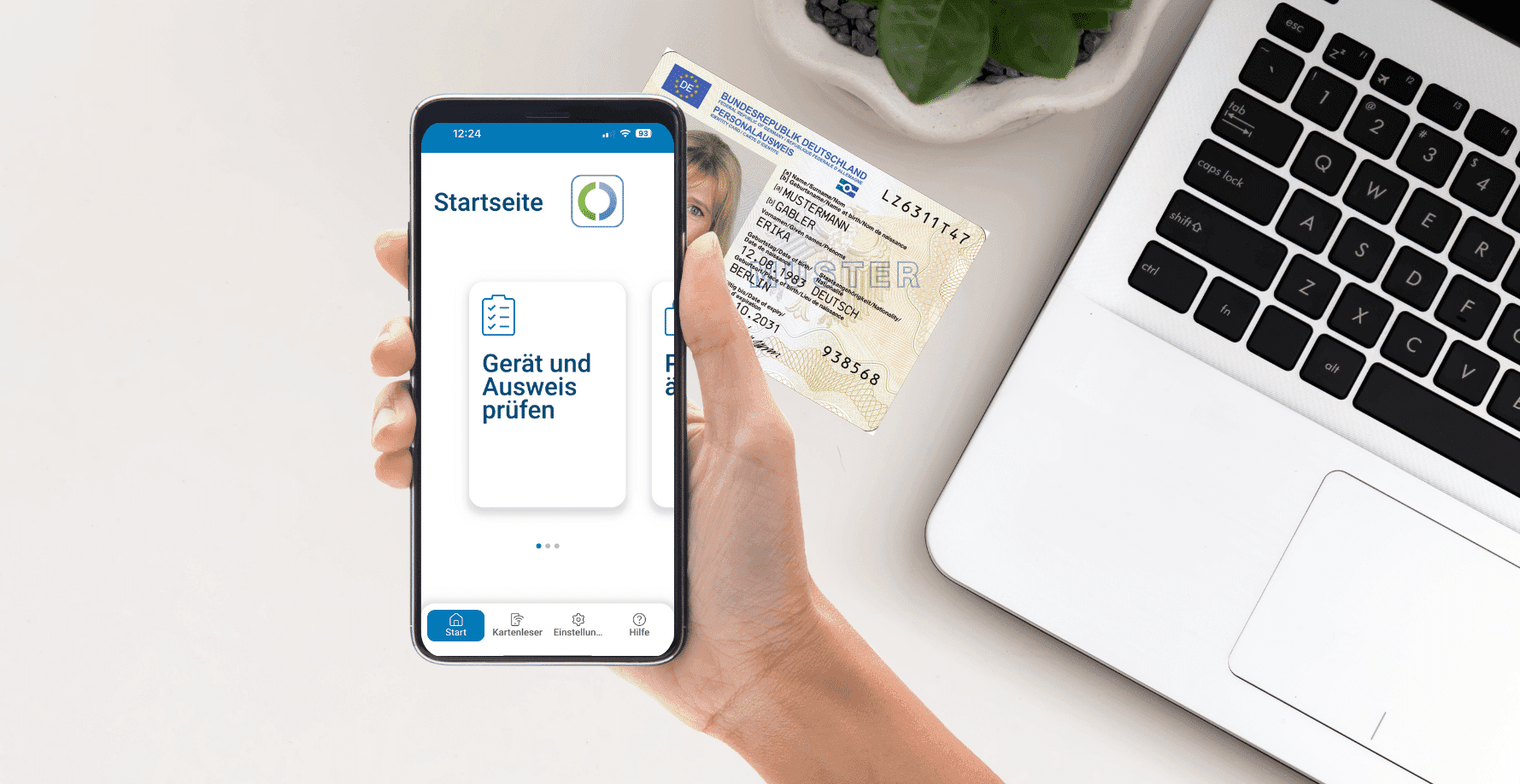
Possible uses of the online ID function of the electronic identity card
The electronic identity card has become increasingly important in recent years. With the online ID function of the identity card, citizens can use numerous services online. But what exactly can the current electronic identity card actually do?
In this blog article, we will present in detail the functions, advantages and possible applications of the online ID function of the electronic identity card.
What is the eID?
The eID is an electronic identification used in many countries to offer citizens a secure and unique digital identity. It enables individuals to identify themselves online and gain access to various services. This digital ID can exist in the form of a digital identity card, a biometric passport or any other secure electronic medium.
Identity Card
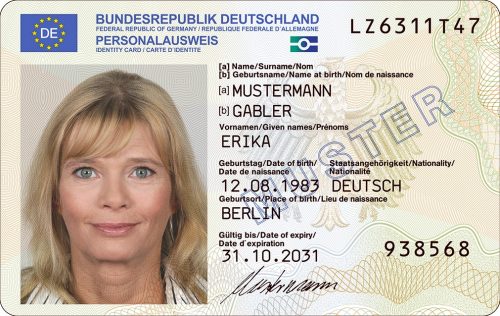
The identity card is an official document that confirms a person's identity. Since 2010, there has also been the electronic identity card, which additionally features an online ID function. The identity card contains information such as name, date of birth, gender, nationality and place of residence of the person. It is an important proof of identity and is often needed to identify oneself, for example when opening a bank account, concluding contracts or applying for official documents.
The electronic identity card, also called eID, additionally contains a chip on which the person's personal data is stored. This chip makes it possible to identify oneself securely and verified on the internet, for example for online banking, e-government services or proof of age in online shops.
The electronic identity card thus offers additional security and convenience in the digital age. However, it does not replace the classic identity card, but supplements it with the possibility of digital identity verification.
The electronic identity card: How it works!
Basics of the electronic identity card
The electronic identity card is more than just a physical identity document; it is a key to digital identification. Equipped with a special chip, it stores personal data such as name, date of birth and address. Since its introduction in 2010, it has revolutionised the way citizens interact with authorities and private institutions. The electronic identity card enables citizens to identify themselves securely online and to apply electronic signatures. This facilitates access to various online services, such as administrative procedures, banking transactions or the use of e-government services. With the electronic identity card, citizens can also prove their identity in the digital world, for example for age verification in online shops or when using online banking services.
The electronic identity card is based on the concept of electronic authentication, where the holder's personal data is used for online access to protected services and information. The security of the electronic identity card is ensured by a combination of encryption technologies and biometric features to protect the authenticity and integrity of the data.
The chip in detail
The built-in chip in the identity card is the heart of the digital functions. It not only stores basic identity data, but also offers the possibility to store additional authorisations or certificates. This technological expansion opens the gateway to a variety of online services. The chip in the identity card is usually a contactless chip that allows wireless communication with readers. This makes it convenient to use the card for various purposes without physical contact being required.
The possibilities offered by this chip are diverse and vary depending on the legal provisions of the respective country. In some countries, the chip can also be used for access to healthcare services, banking, electronic tax returns and other digital services.
Overall, the chip in the identity card is an important component for the security and efficiency of digital identity management and authentication. It enables citizens to navigate safely in the digital world and to identify themselves easily and conveniently.
Activation of the online ID function
The activation process
In order to use the online ID function, the identity card must first be activated. This activation is a decisive step to enable digital identification and verification. It can be done either directly at an office or conveniently online via the AusweisApp.
The role of the AusweisApp
The AusweisApp is the link between the physical ID card and digital services. It allows users to read their identity card via a smartphone or computer and authenticate themselves for online services.
Proof of identity in the digital age
Secure online identification
The online ID function enables secure and reliable identification on the internet. Through the combination of the electronic identity card and the AusweisApp2, citizens can identify themselves to authorities and companies on the internet without their physical presence.
Areas of application of the eID
The possible uses of the online ID function are diverse. From logging in to online portals of authorities to conducting banking transactions and using e-government services – the eID function facilitates everyday life in many areas.
A practical example of the online ID function: i-KFZ
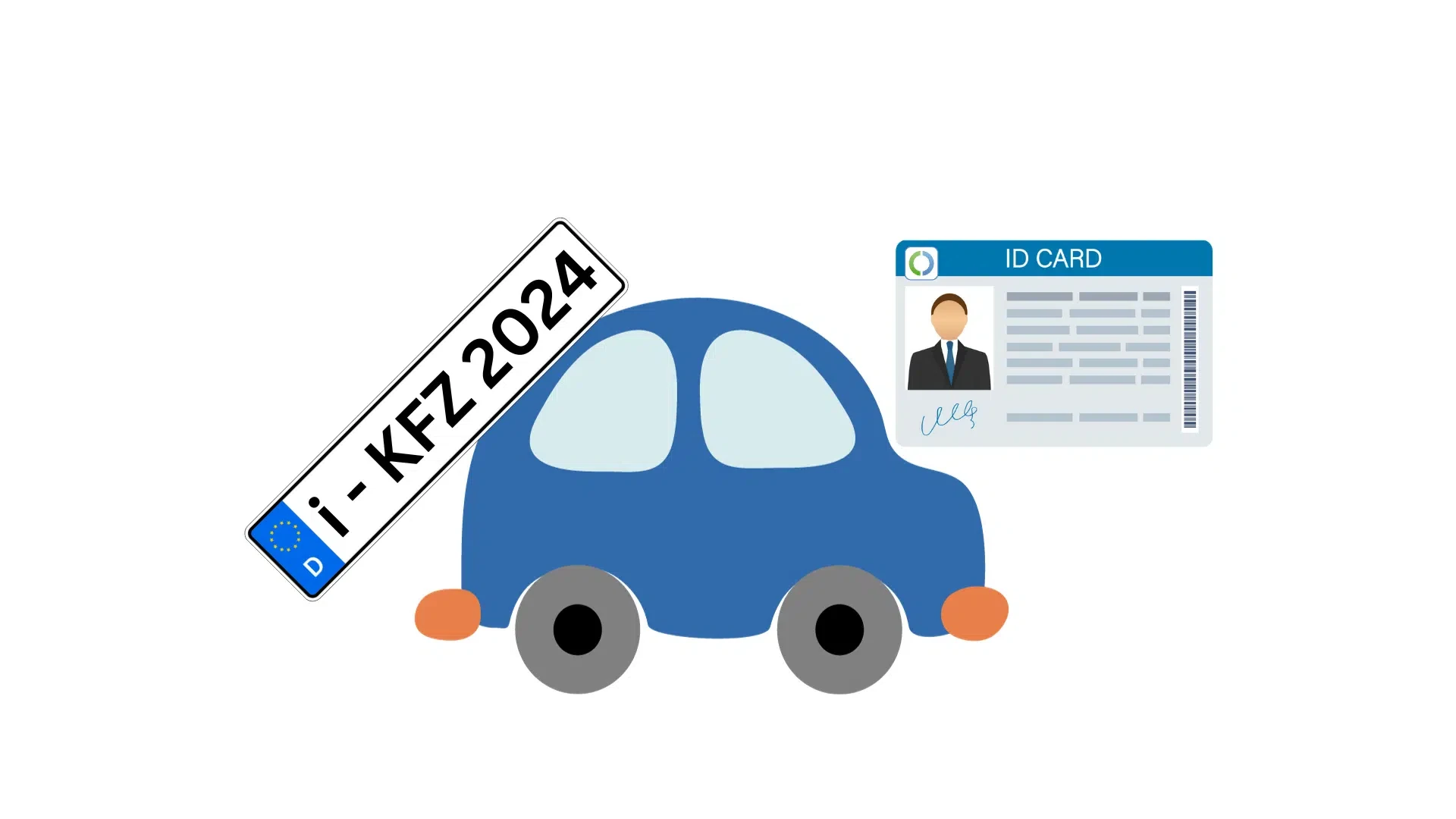
By using the online ID card, you will save yourself many trips to public offices in future.
A practical example of the online ID function is the i-KFZ function. With this function, vehicle owners can complete various administrative actions relating to their vehicle online, without having to go to the registration office or vehicle licensing authority in person. This includes, for example, the re-registration of the vehicle, the application for temporary license plates or the de-registration of a vehicle. Through the online ID function, the identity of the person can be established securely and uniquely, and all required data can be transmitted digitally. This saves time and effort, as long waiting times in public offices can be avoided.
The digital signature
Legal bases
The digital signature, enabled by the eID, has the same legal standing as a handwritten signature. We explain the legal framework and how you can use this function.
Application examples of the digital signature
Finally, we look at concrete scenarios in which the digital signature facilitates everyday life and speeds up processes. Find out more about the digital signature here.
Citizen communication and access to information
Official information services
To inform citizens about the electronic identity card and its functions, authorities provide comprehensive information on their websites. This ranges from instructions on how to apply for and activate the identity card to FAQs. You can find visual and a lot of further information on the identity card portal (a page of the Federal Ministry of the Interior). Here you can also, for example, obtain a PIN reset letter.
Navigating through the authority pages
An effective navigation path on authority websites helps citizens to access relevant information quickly and easily. This not only facilitates the use of the online ID function, but also improves the general understanding of digital services.
Practical application: Going to the citizens' registration office and the AusweisApp2
The way to the electronic identity card
To apply for the electronic identity card, the first step into the world of digital identification is going to the citizens' registration office (Bürgerbüro). It is then possible to register for the online function. After applying, the card must be collected in person at the citizens' registration office (Bürgeramt), where the card will be activated with the online ID function.
PIN letter (Registering and activating)
The PIN letter is an important part of activating the online ID function of the electronic identity card. After applying, the PIN letter is sent by post to the specified address. The PIN letter contains the transport PIN (PIN) and the unlocking number (PUK) required for activation. This PIN should be kept secret to prevent unauthorised access to personal data.
AusweisApp2: The tools for digital identification
The AusweisApp is an application required to use the online ID function of the electronic identity card. With this app, citizens can read their identity card on their computer or smartphone and use various online services. Modern smartphones are now almost all equipped with an NFC-enabled card reader. A special card reader is therefore no longer necessary today for use on the user side.
Services relating to the e-ID
The service contents offer a comprehensive range of information, from applying for the identity card and activating the online ID function to utilizing various online services.
Security and data protection
Security features of the online ID function
The security of the online ID function is of paramount importance. With a PIN delivered via PIN letter and encrypted data transmission, the electronic identity card ensures a high level of data protection.
Data protection aspects
As well as the secure transmission of data, the system places great value on protecting privacy. Only necessary data is transmitted and the user always retains control over their information.
Outlook and further development
The future of the online ID function
eIDAS 2.0 is an evolution of the original eIDAS regulation and represents an important step towards a unified digital identity framework in the European Union. By 2024, all EU member states must make a Digital Identity Wallet (EUDI Wallet) available to every citizen who wishes to have one. This initiative aims to improve the coverage, acceptance and user experience of electronic ID (e-ID) schemes and to simplify cross-border authentication.
The EUDI Wallet, similar to existing digital wallets of major technology companies, is designed to store various digital credentials, including identity cards, driving licences, health data and travel documents. However, it is not intended to replace existing ID documents, but to offer a digital version of them instead. Each member state has the freedom to design its own wallet, but all wallets will be interoperable across the EU and will comply with GDPR and cybersecurity regulations. They will offer strong cryptography, selective attribute disclosure and support for a wide range of functions and applications.
In February 2023, the European Commission released the first EU toolset for the EUDI Wallet. This toolset is a collaborative effort with the member states to establish a robust digital identification and authentication framework. It also supports pilot programmes in areas such as mobile driving licences, eHealth, payments and professional qualifications. Member states have one year to introduce the wallet, and it can be issued either by a government department or a private provider. The wallet must be available free of charge to all citizens who want it and must allow the verification of various attributes.
Enter a name for the team. In our example, we named the team Clients, as we will create all clients under this team with a channel.
You can find more information here
All details about the identity card
How do I know if the eID is activated?
To find out if the online ID function, also known as eID, is activated on the electronic identity card, there are several options. A simple method is to check using the AusweisApp2. After downloading and installing the app, the identity card can be read using a card reader. There is a function within the AusweisApp2 to check the status of the eID.
How can I activate my identity card with the online ID function?
The activation of the online ID function can be done either in person at the citizens' registration office or online using the AusweisApp2. When activating in person, a PIN letter containing the PIN for activation is sent to the specified address. Online, activation can be carried out using a card reader and the AusweisApp2.
What data is stored on the electronic identity card?
Various personal data can be stored on the chip of the electronic identity card, such as name, date of birth and address. In addition, other information such as the electronic residence permit or specific authorizations can also be saved.
Is the online ID function secure?
The online ID function of the electronic identity card is considered secure because a PIN is required for its use. This PIN consists of six-digit numbers and should be kept secret. Furthermore, data is only transmitted via encrypted connections to ensure the security of personal information.